
Search Sussex County Property Records
Sussex County property records are maintained by the Recorder of Deeds in Georgetown and are available to the public for search and review. Whether you need a deed, mortgage document, plat map, or assessment data, the county keeps a wide range of real property records that you can access in person, by mail, or through the county's online land records portal.
Sussex County Recorder of Deeds
The Sussex County Recorder of Deeds is the primary office for recording and accessing property records in the county. Recorder Alexandra Reed Baker oversees the office, which is located at 2 The Circle, Georgetown, DE 19947. You can reach the office by phone at (302) 855-7785, by fax at (302) 855-7787, or by email at deeds@sussexcountyde.gov. The office is open Monday through Friday from 8:30 AM to 4:30 PM, though the recording window closes at 4:00 PM. The office is closed on state and federal holidays.
The Recorder's office records deeds, mortgages, mortgage satisfactions, mortgage assignments, powers of attorney, plats, and other documents that affect real property in Sussex County. Each document becomes part of the public land record once it is stamped and indexed. The office also collects Realty Transfer Tax on applicable documents and sends those funds to the state and county per Delaware law. Sussex County receives an 11.94% allocation from the distributed state share of that tax.
Visit the Sussex County official website to get links to all county departments, including the Recorder's office, Assessment, and Planning and Zoning.
The screenshot below was captured from the Sussex County official website, which connects residents to county departments and services.
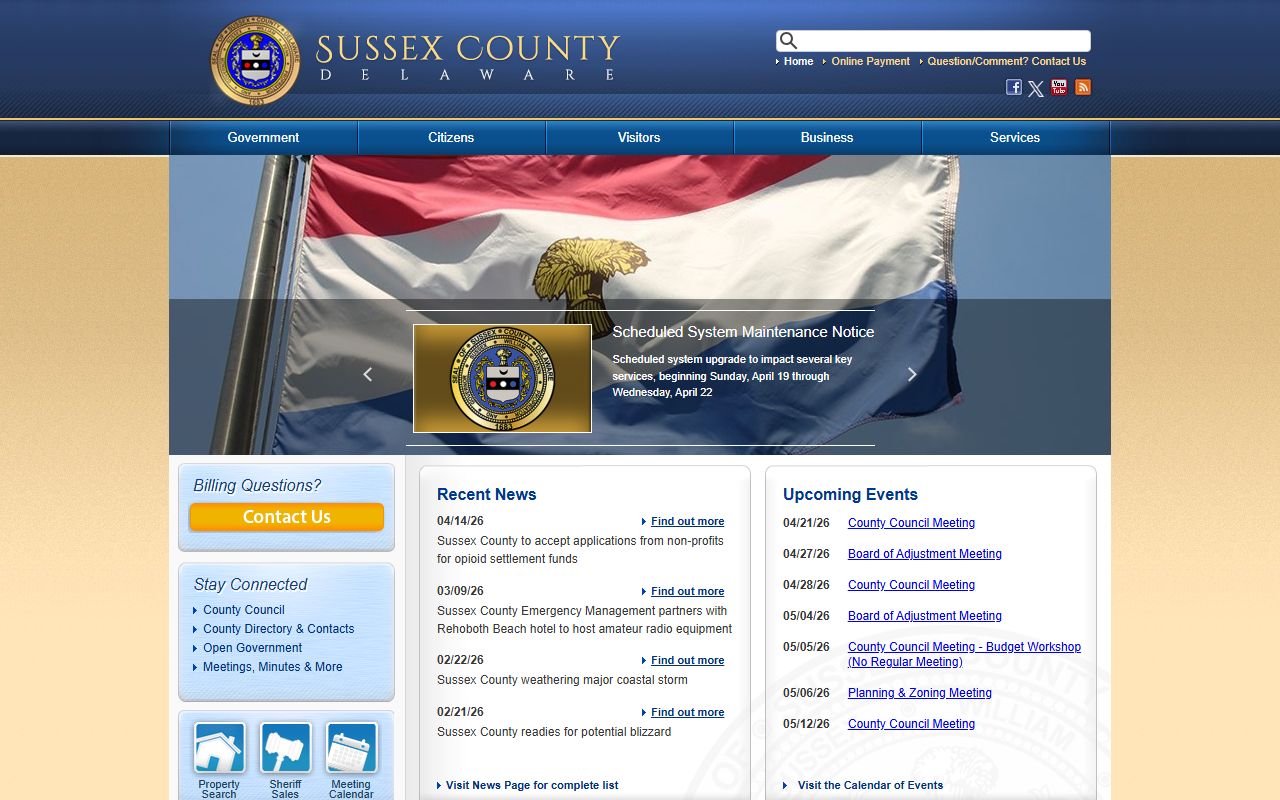
The county site gives you quick access to recorder, assessment, and planning resources all in one place.
Note: The recording window at the Recorder of Deeds office closes at 4:00 PM, one half hour before the office itself closes, so plan your visit accordingly.
Search Property Records Online
Sussex County uses the US Land Records system to provide online access to recorded documents. You can search for land records at no cost using criteria such as grantor or grantee name, document type, recording date, book and page number, or instrument number. Basic index information is free to view. Document images are also available with a watermark at no charge. If you want to download or print clean copies without watermarks, you can pay a per-page fee or buy a monthly subscription for $75.
This system is useful for title searches, due diligence on property purchases, and tracking the history of a parcel. You can look at deeds going back many years and trace the chain of title without visiting the courthouse. That said, some older or historical records may not be in the online system, and for those you may need to contact the office directly or visit in person.
The image below shows the Sussex County Recorder of Deeds official page, which links to the online land records portal.
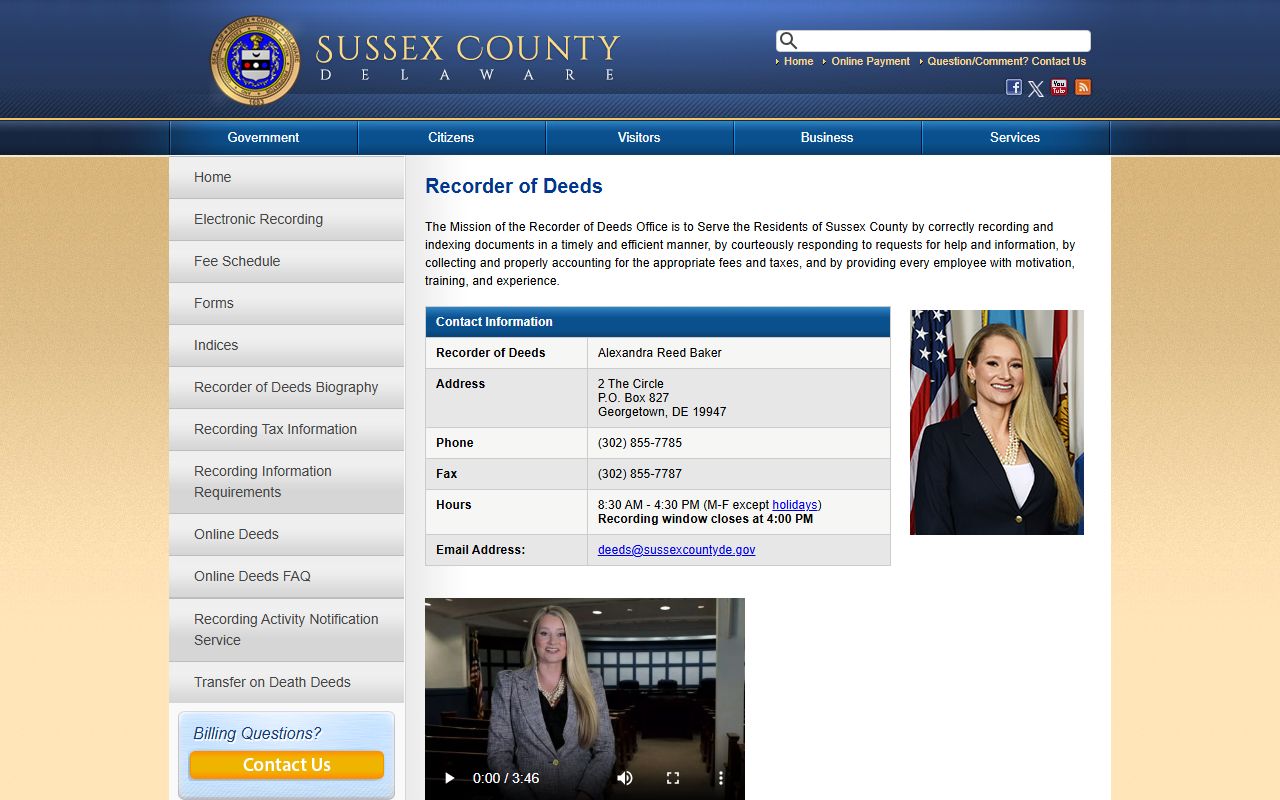
From this page you can find contact information, recording requirements, and the link to search documents online.
Recording Requirements for Sussex County Documents
Any document that affects real property in Sussex County must meet specific requirements before the Recorder's office will accept it for recording. Each document must include the county tax assessment parcel identification number for every parcel affected. The document must also show "prepared by" followed by the name and address of the person who drafted it, placed on the first page. Documents must be properly notarized and contain an adequate legal description of the property.
The types of documents accepted include deeds, mortgages, mortgage satisfactions, mortgage assignments, powers of attorney, and plats. Each must meet the statutory requirements set out in Delaware Code Title 9, Chapter 96, which covers recording rules, parcel identification, and the authority to redact personal information from public records. Title 9 also governs the responsibilities of county recorders statewide.
Rules for deeds and chain of title are found in Delaware Code Title 25, Chapter 1. This chapter outlines what makes a deed valid and how the recording system creates a legal record of ownership. Any deed that is not recorded may not be enforceable against a later buyer who had no notice of it.
Note: Documents submitted without the required parcel identification number or "prepared by" information will be rejected at the recording window and must be corrected before resubmission.
Transfer on Death Deeds in Sussex County
Delaware passed a significant new real property law in 2025. On June 30, 2025, the Delaware State Senate unanimously approved HB147, the "Transfer on Death Act." This law lets real property owners name a beneficiary who will receive the property when the owner dies, without going through probate. The beneficiary has no legal interest in the property while the owner is alive. The owner keeps full control and can sell, change, or revoke the deed at any time.
The Sussex County Recorder of Deeds department accepts Transfer on Death Deeds for recording. To be valid, these deeds must meet all requirements in Delaware Code Title 25, Chapter 2, including proper notarization, two witnesses (at least one of whom is not a beneficiary), and recording before the property owner's death. A Transfer on Death Deed that is not recorded before the transferor's death has no legal effect.
The page below from the Sussex County Recorder of Deeds department describes the Transfer on Death Deed program and what the office requires.
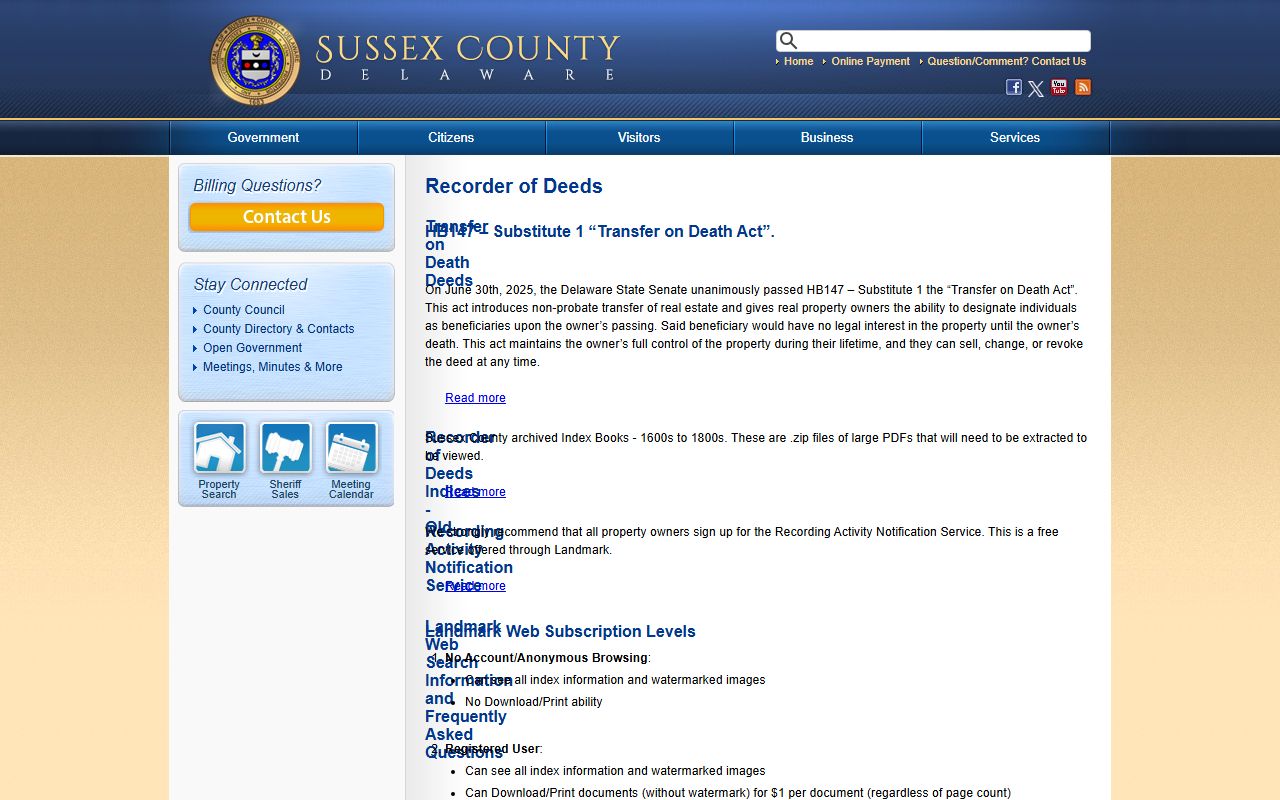
This page is a good starting point if you want to use a Transfer on Death Deed to pass real estate to a loved one outside of probate.
Property Assessment Records
The Sussex County Assessment Department keeps records on all real property in the county for tax assessment purposes. You can search assessment records and find parcel data through the county website. The county is currently in the middle of a Property Reassessment Project, which will update assessed values across Sussex County. The project website has updates on the progress as the work moves forward.
Active and completed building permits and inspection data can be viewed through the county's Self Service portal, which is linked from the Assessment Department page. This is useful if you want to know what work has been done on a property, whether permits were pulled, and whether inspections passed. Sussex County is also in the process of moving its financial and permitting systems to a secured cloud-based environment to improve speed and reliability.
Property owners who disagree with their assessed value can appeal to the Board of Assessment Review. The Board meets on a set schedule to hear appeals. You must file your appeal by the deadline listed on the county website. At the hearing, you can present evidence that your property's assessed value does not match its market value.
The screenshot below is from the Sussex County Assessment Department page, which links to property search tools and reassessment updates.
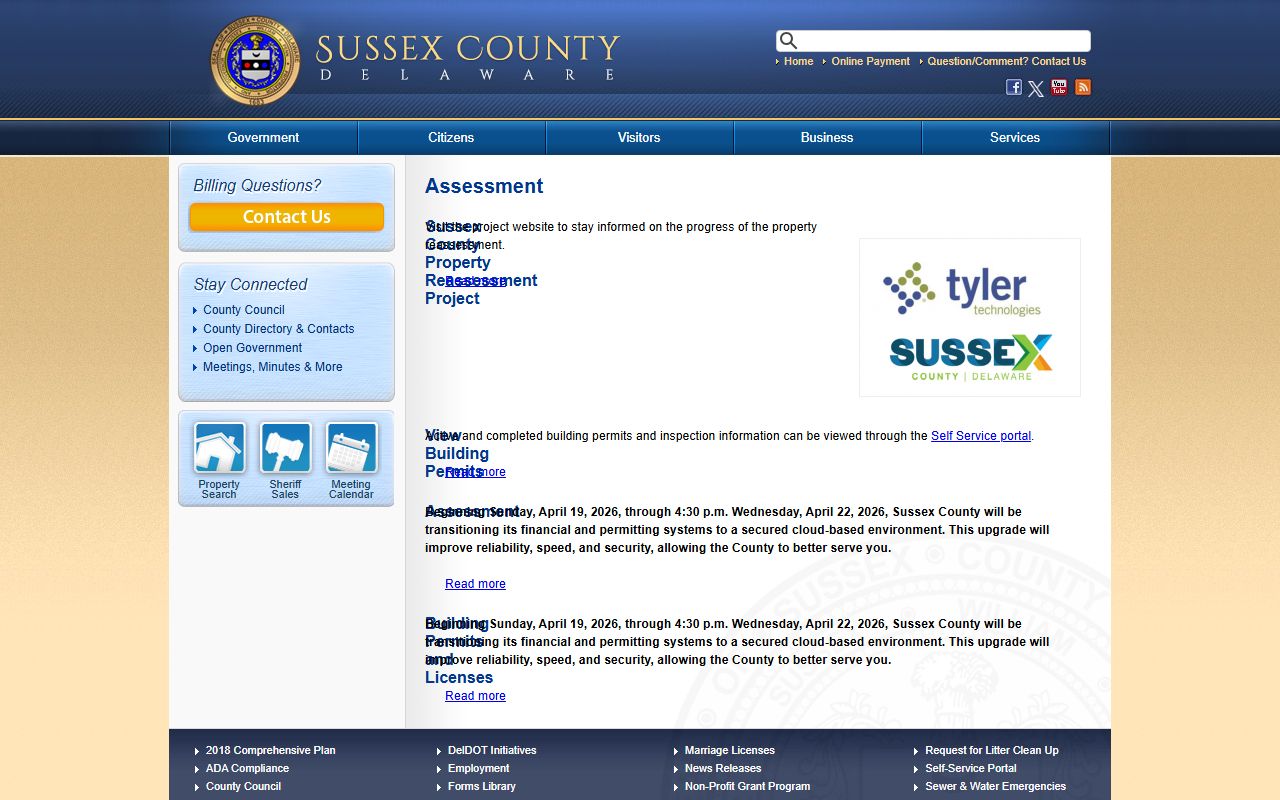
From here you can access the parcel search tool, find your assessed value, and get information on filing an appeal.
Note: Sussex County's ongoing reassessment project may result in changes to assessed values, which can affect property tax bills once the new values take effect.
Realty Transfer Tax
Delaware imposes a realty transfer tax on the sale of real estate. Under Delaware Code Title 30, Chapter 54, the tax rate is 3% of the property's sale price or assessed value, whichever is higher. The tax is typically split between the buyer and the seller, with each paying 1.5%. However, the split can be negotiated as part of the sale agreement.
Sussex County receives 11.94% of the state's distributed share of this tax. The Recorder's office collects the transfer tax at the time of recording and remits those funds according to state law. If you are buying or selling property in Sussex County, factor this tax into your closing costs. Certain transfers are exempt from the tax, including transfers to a spouse, transfers to a government entity, and some other specific situations described in the statute.
Planning, Zoning, and Plat Records
The Sussex County Planning and Zoning Department manages building permits and inspections for properties in unincorporated parts of the county. It also reviews subdivision applications and maintains subdivision plats and plans. Plats that are recorded with the Recorder of Deeds become part of the official land record and describe the boundaries of subdivided lots.
If you need to find a subdivision plat, you can search for it through the US Land Records online system or request a copy from the Recorder's office. Plats are useful for understanding lot boundaries, easements, and the layout of a development. Planning and Zoning decisions, such as variances and special use permits, create a record that may affect how a property can be used.
Below is the Sussex County Planning and Zoning Department page, which covers permits, subdivisions, and zoning matters.
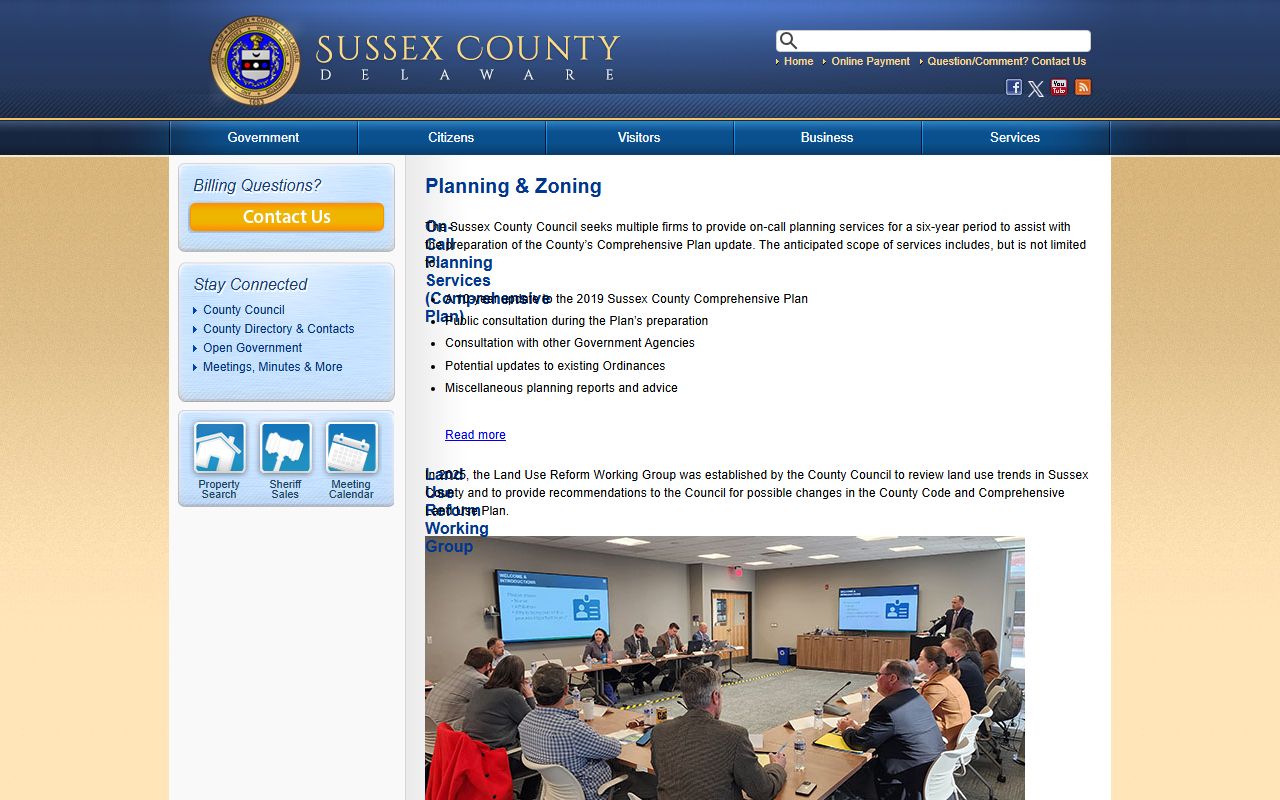
Use this resource if you need to look into the zoning history of a parcel or check on active permits for a property.
Note: Building permits for properties inside incorporated towns and cities in Sussex County are handled by those municipalities, not the county Planning and Zoning Department.
Fair Housing and Deed Restrictions
Some older deeds in Delaware contain restrictive covenants that attempted to limit who could own or occupy a property based on race or other protected characteristics. These covenants are void and unenforceable under Delaware Code Title 6, Chapter 46, which enforces fair housing protections. If you come across such language in an older deed, know that it has no legal effect. Delaware law prohibits discriminatory deed covenants and protects buyers from any attempt to enforce them.
Historical Property Records
For older land records not available through the county's online system, the Delaware Public Archives holds historical documents from all three Delaware counties, including Sussex. These records can include colonial-era land grants, early deed books, and other documents that predate modern recording systems. Researchers, genealogists, and title professionals sometimes need to go back further than what the Recorder's current index covers, and the Public Archives is the place to look for that material.
The Archives maintains collections from Sussex County going back centuries. You can contact the Archives directly or search their online catalog to see what is available before making the trip. Not all records are digitized, so some searches may require an in-person visit to Georgetown or to the Archives facility in Dover.
Cities in Sussex County
Several cities in Sussex County have their own property records pages with location-specific information on courthouses, filing procedures, and local resources.
Milford straddles both Sussex and Kent counties. If you are dealing with property in the Kent County portion of Milford, the Kent County Recorder of Deeds handles those records.
Nearby Counties
Sussex County borders Kent County to the north. New Castle County is Delaware's northernmost county. Both have their own Recorder of Deeds offices and property records systems.