
Search New Castle County Property Records
New Castle County property records are maintained by the Recorder of Deeds and cover deeds, mortgages, land documents, and other recorded instruments going back to the early 1800s. You can search records online or visit the office in Wilmington to look up ownership, review recorded documents, and get certified copies.
New Castle County Recorder of Deeds
The New Castle County Recorder of Deeds is the main office for recorded property documents in the county. It sits inside the Louis L. Redding City/County Building at 800 N. French Street in Wilmington. The office is open Monday through Friday, 8:00 AM to 4:30 PM. Recording hours end at 3:30 PM, so bring documents early if you need same-day recording. Walk-in service is available for recording, searching, and getting copies.
The Recorder handles a wide range of land documents. Deeds and mortgages are the most common, but the office also records mortgage satisfactions, assignments, and releases. You can file powers of attorney here, as well as plats, subdivision plans, and survey maps. UCC financing statements and various types of liens are recorded too. Miscellaneous documents that affect real property can also be filed when they meet state requirements.
New Castle County is the most populous county in Delaware, with about 570,000 residents. It sits at the northern end of the state and has the county's largest share of Realty Transfer Tax receipts, at 44.48% under Delaware law. The county is run by a County Executive and a 12-member County Council. The official county website links to each department, including the recorder's office and the Division of Assessment.
The lead-in image below shows the New Castle County official website, which serves as a hub for county services including property records access.
The New Castle County government site provides links to land use, assessment, finance, and public safety departments.
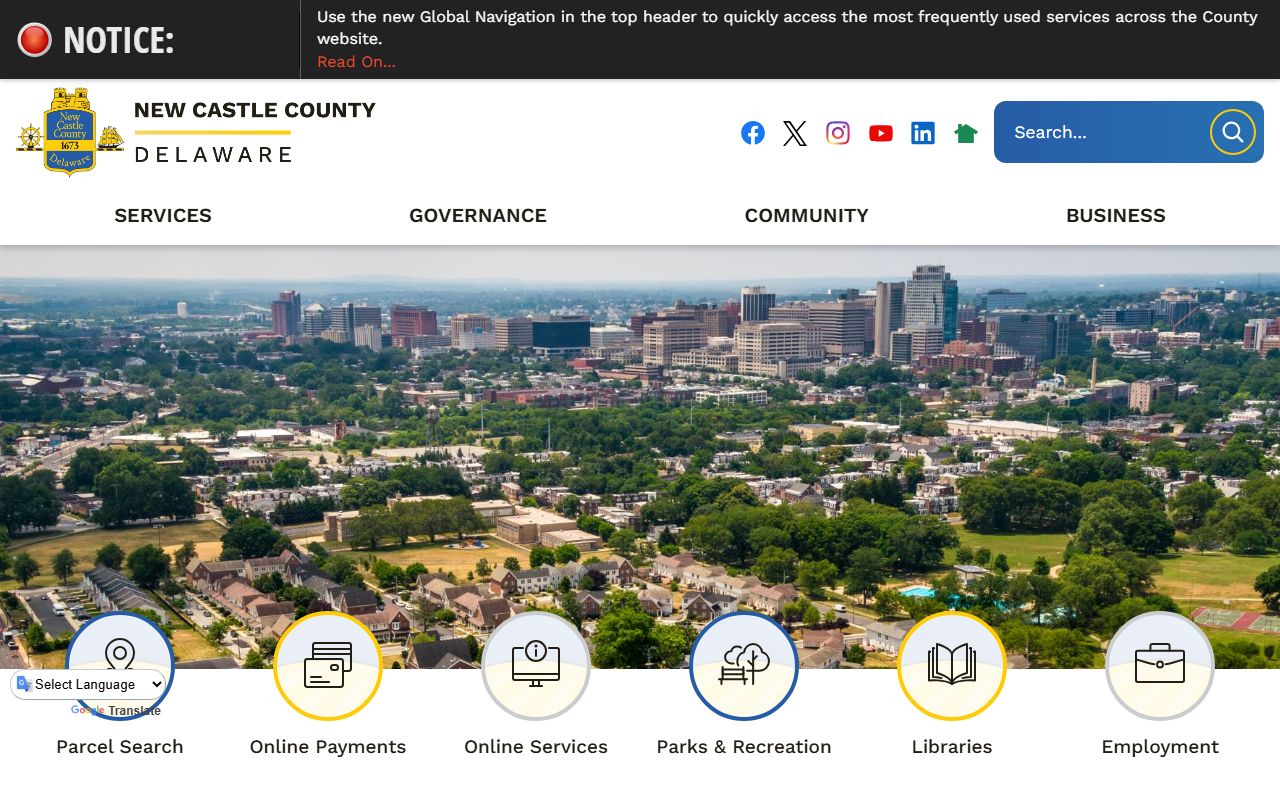
The county site links directly to the Recorder of Deeds, the Division of Assessment, and other offices that handle land and property documents.
Search Land Records Online
The county uses a third-party portal called US Land Records to give the public online access to recorded documents. You can reach it at i2f.uslandrecords.com. Searching the index is free. Document images cost $2.00 per page for casual users. A monthly subscription runs $75 and gives unlimited access to document images, which is useful if you search records often.
The system has several search options. You can look up by grantor or grantee name, instrument number, book and page, date range, or parcel ID. For older records, the book and page search is often the best route. The database goes back to the early 1800s. You will need Adobe Reader to view and print documents, and you must allow pop-ups in your browser for the site to work. Technical support for the portal is handled by Avenu Insights.
Note: Free index searches show names and document types. You pay only when you open or download a document image.
Recording Fees and Realty Transfer Tax
The fees page at ncdeeds.com lists current rates for recording documents. The base fee covers the first page, with extra charges for each additional page. Marginal notations, which cross-reference older recorded documents, also carry their own fees. These costs are modest but add up when recording multi-page instruments.
The Realty Transfer Tax is collected at the time of recording for deeds and other qualifying instruments. The standard rate is 3% of the sale price or consideration, split evenly between the buyer and seller. So each party pays 1.5% at closing. Under Delaware Code Title 30 Chapter 54, first-time buyers get a small break. If you buy after August 1, 2017 and qualify as a first-time buyer, the rate drops by 0.5% on the first $400,000 of the purchase price. Exemptions exist for certain transfers, such as gifts or transfers between spouses.
Frequent users can sign up for a subscription service through the online portal. This gives unlimited access to document images for a flat monthly fee, which can save money compared to paying per page. Walk-in users at the office can use public access computers during office hours.
The recorder's locations page has directions and parking details for the Wilmington office.
Property Assessment Records
The New Castle County Department of Finance runs the Division of Assessment. This office values all real property in the county for tax purposes. Assessment records show ownership information, property characteristics, and the assessed value used to calculate county, school district, and municipal taxes. You can search these records online through the property assessment page on the county website.
Below is a screenshot of the property assessment portal, where owners can look up current values and review parcel details.
The New Castle County Property Assessment page lets you search by address or parcel number to find assessed values and ownership details.
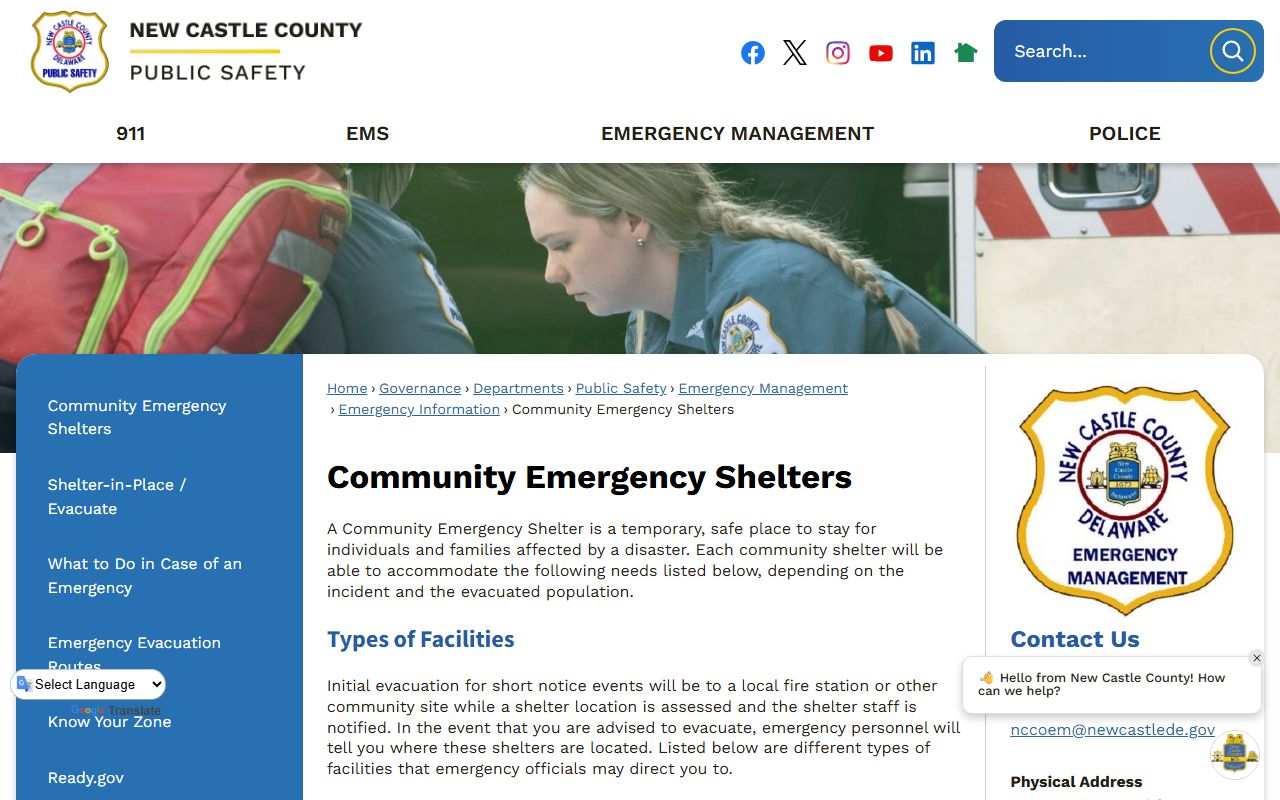
The assessment database covers all real property in the county and is updated when ownership changes or new assessments are completed.
If you think your assessed value is wrong, you can file an appeal with the Board of Assessment Review. Appeals must be filed by a set deadline each year. Missing that date means waiting until the next cycle. The Division of Assessment office can tell you the current deadline and what forms to submit.
Delaware Law on Recording Deeds
Delaware law sets the rules for how deeds and other land instruments must be recorded. Delaware Code Title 9 Chapter 96 governs county recorders. Under that law, recorders are elected to four-year terms. They must record all deeds, mortgages, releases, powers of attorney, plats, and other land instruments that meet legal requirements. Every document submitted for recording must include the county tax parcel ID number and a "prepared by" line on the first page. Recorders have the authority to redact discriminatory language and personal identifying information from public records.
The image below links to the Delaware Code on recorders, which outlines their duties and the rules for what must be recorded.
The state code at delcode.delaware.gov sets out recorder duties and document requirements for all three Delaware counties.
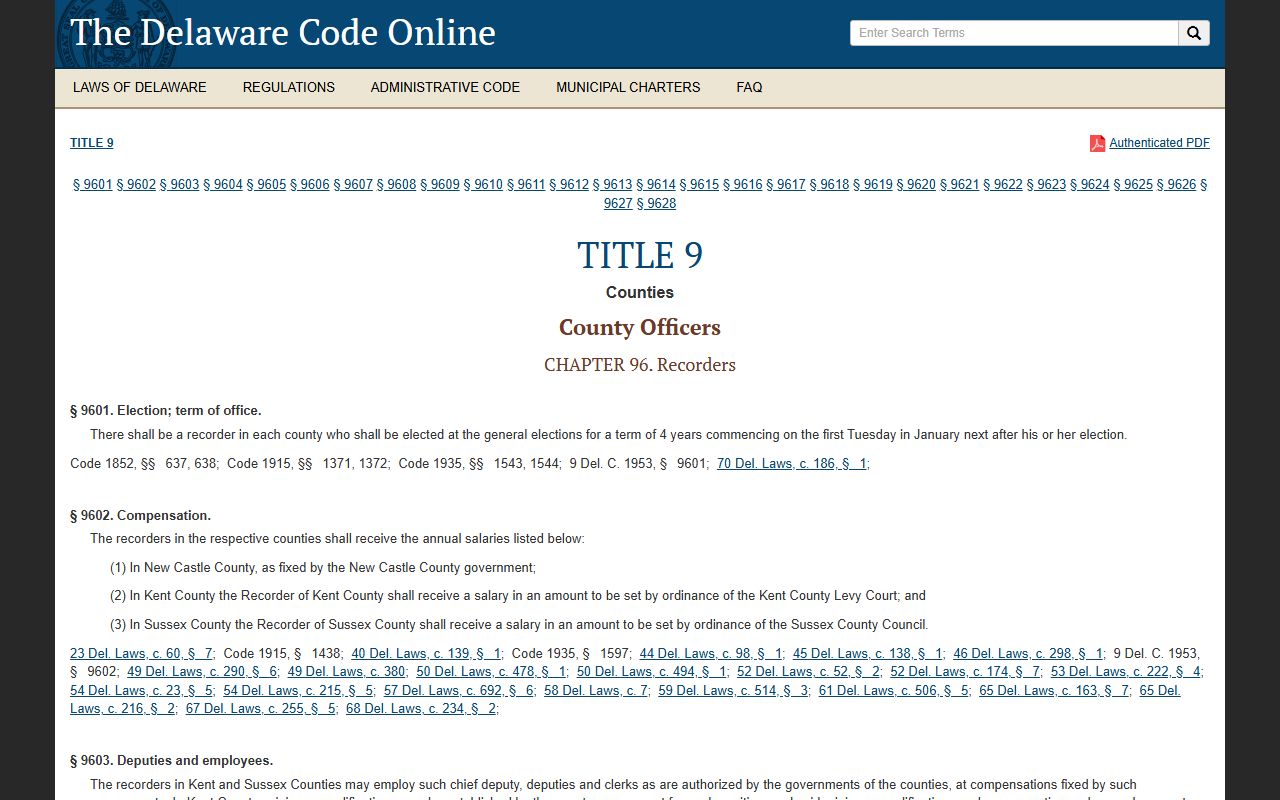
This chapter of the Delaware Code applies to New Castle County, Kent County, and Sussex County equally, though each recorder's office may have its own procedures for walk-in service and copying fees.
Title 25 Chapter 1 of the Delaware Code covers deed rules in detail. One key point: deeds are never changed after recording. If you need to fix an error or transfer ownership again, a new deed must be prepared and recorded. Both the old and new deed form the chain of title. That chain is how ownership history is tracked from one owner to the next over time.
Types of Recorded Documents
Not all land documents look the same. Deeds transfer ownership from one party to another. Mortgages secure a loan against real property. When a loan is paid off, the lender records a satisfaction or release to clear the lien. If a mortgage is sold to another lender, an assignment is recorded to show the new holder. All of these instruments become part of the public record once filed with the Recorder of Deeds.
Plats and subdivision plans are maps filed by developers and surveyors. They show lot lines, street layouts, and easements. These records matter when you need to know the exact boundaries of a parcel. Survey maps are often filed alongside deeds for new construction or when a parcel is split. Financing statements under the UCC system are also recorded here when personal property is used as collateral in a real estate transaction.
Powers of attorney filed with the recorder allow one person to act on behalf of another in real estate dealings. This comes up in estate planning and in situations where a property owner cannot be present at closing. Once recorded, a power of attorney is part of the public land record.
Note: Check that any power of attorney is still valid before relying on it. Some have expiration dates or can be revoked at any time.
Transfer on Death Deeds and Fair Housing
Delaware added a new tool for property owners in 2025. Title 25 Chapter 2 now allows transfer on death deeds. This lets an owner name a beneficiary who will receive the property at death without going through probate. The deed must be recorded before the owner dies to take effect. The owner keeps full control of the property during their lifetime and can revoke or change the deed at any time. This is a planning tool, not a sale.
The Delaware Fair Housing Act under Title 6 Chapter 46 also shapes what gets recorded. Deed covenants that restrict ownership based on race, religion, national origin, or other protected classes are void and unenforceable. The Recorder of Deeds cannot record any instrument that contains discriminatory language. If older deeds in the chain of title contain such language, it can be redacted from the public record upon request.
Deeds Law and the Chain of Title
The rules for how deeds are written, signed, and recorded in Delaware come from Title 25 Chapter 1. A deed must be acknowledged before a notary or other authorized official. It must describe the property clearly. The grantor must sign, and in some cases the grantee's acceptance is also required. Once the deed is delivered and accepted, ownership transfers. Recording the deed then gives public notice of the transfer.
The image below links to Delaware Code Title 25 on deeds, which sets out the legal rules for how property transfers are documented and recorded.
Reviewing Title 25 Chapter 1 can help you understand what makes a deed valid and how the chain of title works in Delaware.
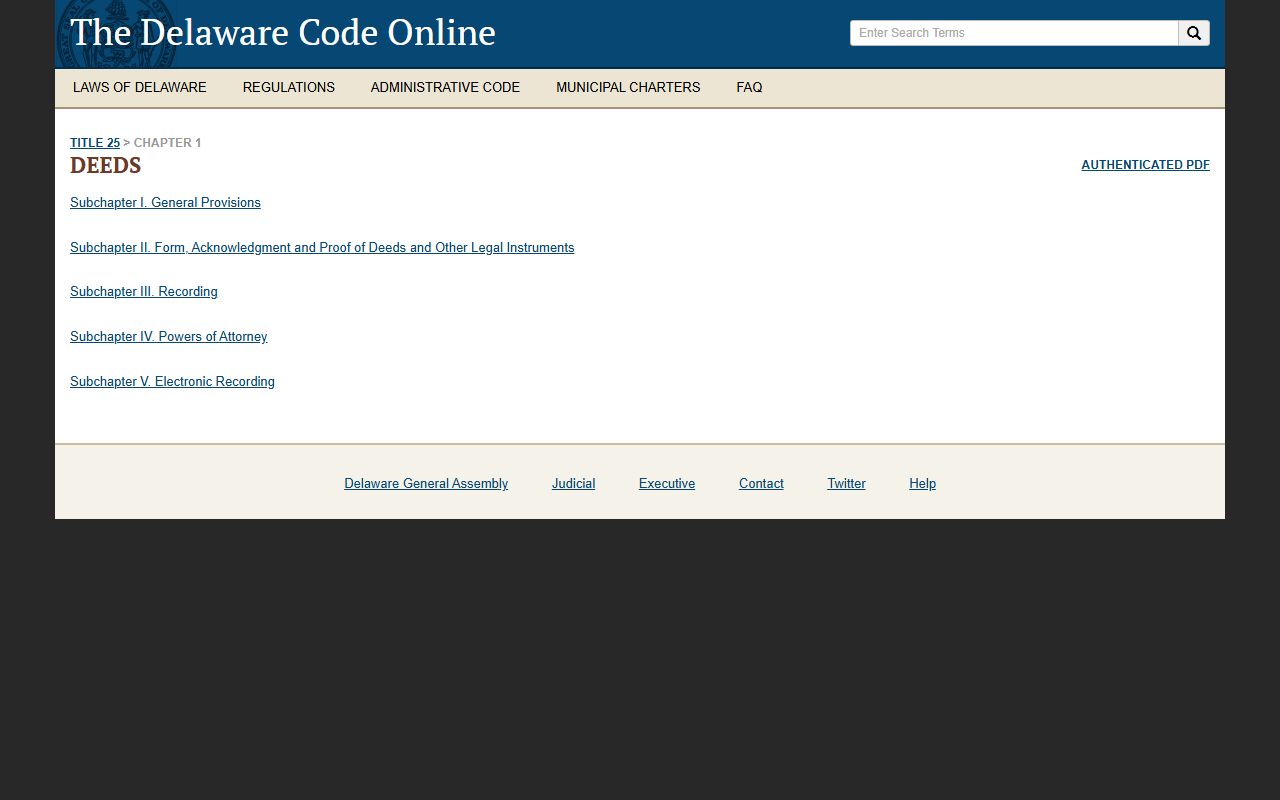
Searching the chain of title means tracing every deed recorded for a parcel from the current owner back through prior owners, sometimes going back decades or more.
Anyone who buys property needs a clear chain of title. Gaps in the chain or unresolved liens can block a sale or refinancing. Title companies and attorneys do title searches to find these issues before closing. The recorded documents in the New Castle County land records are the source material for every title search done in the county.
Delaware Superior Court and Legal Resources
The Delaware Superior Court for New Castle County is located at 500 North King Street, Wilmington, DE 19801, and can be reached at (302) 255-0800. The Superior Court handles civil cases involving real property disputes, mortgage foreclosures, and other land-related litigation. Court records from these cases can affect property titles and may be relevant when searching land records.
For historical records that predate the recorder's current database, the Delaware Public Archives in Dover holds older land records and related documents. The Archives are located at 121 MLK Jr. Blvd North, Dover, DE 19901. Early land grants, colonial-era deeds, and other historical instruments may be found there when the online system does not go back far enough.
You have several ways to find what you need. The online portal at US Land Records handles most searches. The recorder's office in Wilmington handles walk-in requests and certified copies. For historical records, the Delaware Public Archives is the right place to start. For legal questions about property disputes or title problems, the Superior Court system is the venue for formal proceedings.
- Online search: US Land Records portal, free index search
- Walk-in: 800 N. French Street, Wilmington, Mon-Fri 8:00 AM to 4:30 PM
- Assessment records: New Castle County Assessment
- Historical records: Delaware Public Archives, Dover
- Court records: Delaware Superior Court, 500 N. King St, Wilmington
Cities in New Castle County
These cities in New Castle County have their own property records pages with local courthouse details and filing information.
Nearby Counties
New Castle County borders the other two Delaware counties. Each has its own Recorder of Deeds and land records system.